


À méditer cette semaine
"Da bep labous e gan, da bep pobl he yezh" : "A chaque oiseau son chant, à chaque peuple sa langue" – Proverbe Bretons
"To each bird its song, to each people its language."

La Chanson à savourer
L’hymne de la Bretagne:
Bonus, my favorite Breizh lullaby :
Le Poème de la semaine
Jacques Prévert – C'est l'été...
This week, we head west, to the land where the land ends (Finistère), and where the sea whispers stories older than memory.
"La terre est vieille mais elle n'est pas folle" — Proverbe Breton
Bretagne is a land of standing stones and salt air, of myths, music, and moody skies. It’s a place where children still sell shell necklaces and tell legends to visitors as if they were passing down sacred truths. This week’s poem by Jacques Prévert brings us right there: a quiet summer scene in Carnac, where the line between fact and fable gently dissolves.
I’m a very proud Bretonne, and I can tell you, our identity is strong. We often say we’re Bretons before we’re French. We joke that France is just a little country between Bretagne and Italy. My perfect day is a trip to l’île de Batz, a walk among its flowers and lighthouses, a crêpe au caramel beurre salé, and a bolée de cidre in hand. Pure joy.
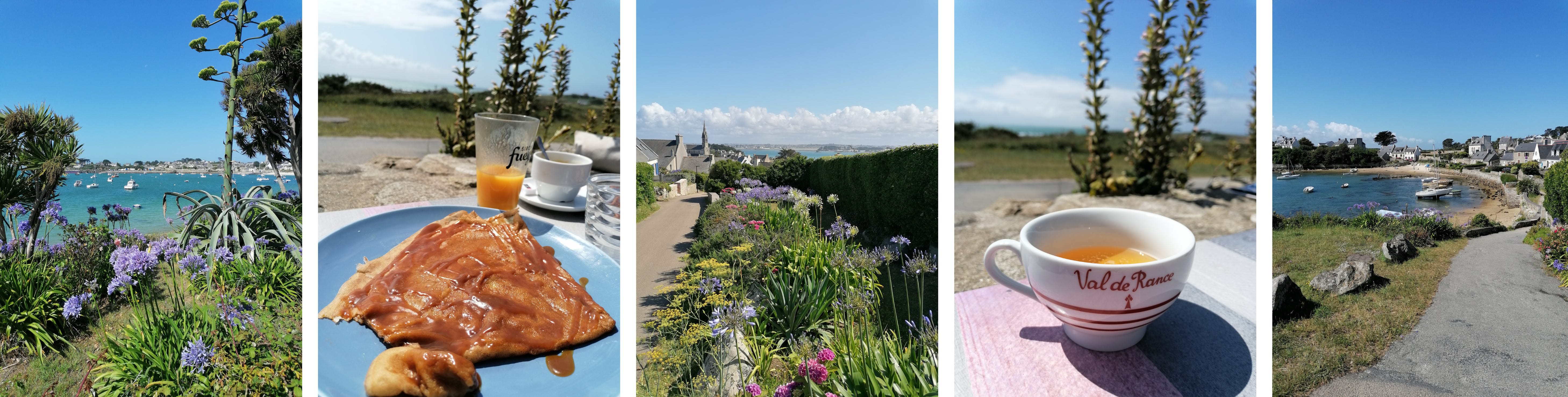
Growing up in Finistère, I was shaped by the lull of the sea, the voice of the wind, and the magic of stories passed down like family treasures.
In this piece, you’ll find a spotlight on Bretagne’s rich history, its resilient language, and its enchanting folklore, an invitation to dive deep into la Terre de Légendes.
Prévert’s poem is more than a summer snapshot, it’s an ode to Bretagne and its timeless poetry.
Laissez les mots vous emporter :
Tip: For the best learning experience, listen first, then read, then check the translation. Repetition is key, immerse yourself as much as you like!
Normal Speed Audio :
Les Paroles :
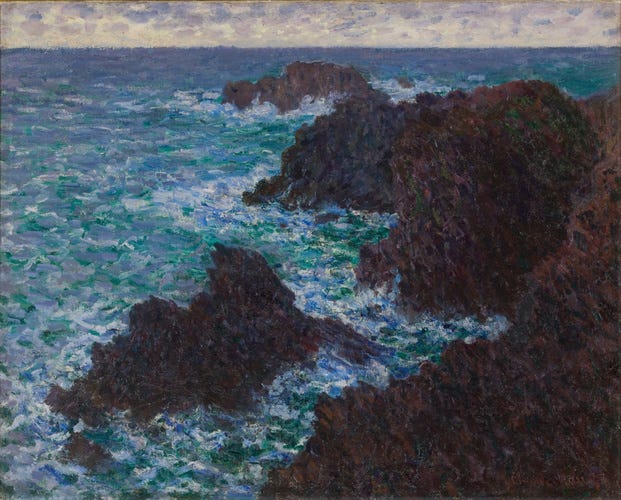
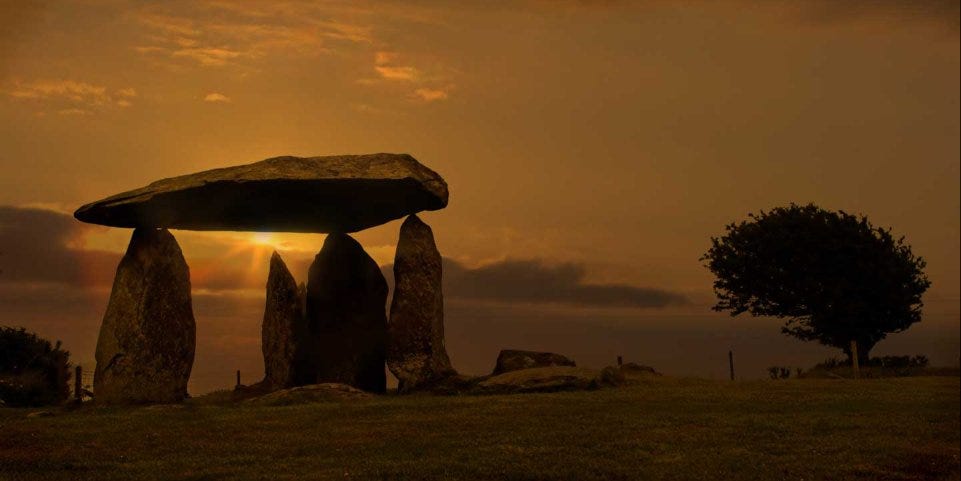
C'est l'été, de jeunes garçons, des enfants, font le tour des alignements de Carnac en racontant aux touristes le mystère des pierres levées.
Bien sûr, ils ont appris cela par cœur, mais leur voix monocorde et chantante garde le charme secret du rêve éveillé, comme s'ils y croyaient, comme s'ils y étaient.
Le même charme que celui des petites filles qui vendent les colliers de coquillages au pied du phare d'Eckmùhl, ou qui disent devant les rochers de Saint-Guénolé, la triste histoire d'un préfet ou d'un sous-préfet emporté par une lame de fond avec sa petite famille, un jour de grande marée.
La Bretagne, la poésie c'est le même pays, celui de Sévy Valner qui ressemble à ces enfants.
Est-il poète simplement parce qu'il est jeune ou surtout parce qu'il est Breton ?
Sans l'avoir entendue il a déjà répondu à la question.
« Il suffit peut-être de le demander à la nuit, quand elle se drape d'un linceul vert-de-gris et parle à travers l'oubli. »
Slow Speed Audio:
La Traduction :
It's summer, young boys, children, walk around the stone alignments of Carnac, telling tourists the mystery of the standing stones.
Of course, they've memorized it, but their droning, sing-song voices keep the secret charm of waking dreams, as if they believed it, as if they were there.
The same charm as the little girls who sell shell necklaces at the foot of the Eckmühl lighthouse, or who tell, before the rocks of Saint-Guénolé, the sad story of a prefect or sub-prefect swept away by a tidal wave with his little family, on a day of high tide.
Brittany and poetry are the same land, the same country as Sévy Valner, who resembles those children.
Is he a poet simply because he is young, or more because he is Breton?
Without having heard it, he has already answered the question:
"Perhaps it's enough to ask the night, when it wraps itself in a verdigris shroud and speaks through oblivion."
A la Rencontre du Poète :
Jacques Prévert (1900–1977)
Jacques Prévert was more than a poet, he was a magician of the everyday, a screenwriter, lyricist, and storyteller who gave 20th-century French poetry a voice that was modern, musical, and unmistakably human.
Prévert’s world is one where children teach us truths, lovers stroll through smoky streets, and even snails become philosophers (La chanson des escargots, which we explored here). His poems blend wit, tenderness, and gentle rebellion. He writes of simple things, schoolboys, rain, cafés, liberty, and yet always invites us to look deeper, to find wonder in the ordinary.

Prévert once said, “Je suis comme je suis.” He didn’t try to impress, just to express. And that sincerity is why his poetry still resonates like a familiar voice on a quiet evening.
Vocabulaire clé & Expressions :
les alignements de Carnac – the stone alignments of Carnac
par cœur – by heart
la voix monocorde – monotone voice
le rêve éveillé – daydream / waking dream
les colliers de coquillages – shell necklaces
une lame de fond – a tidal wave / groundswell
une grande marée – a high tide
draper – to drape / cover
un linceul – shroud
vert-de-gris – greenish grey (copper patina color)
parler à travers l'oubli – to speak through oblivion
Points de Grammaire :
1. “Comme si” + imparfait – To express unreality or imagination
In French, when we want to say “as if…” to describe something imagined, unlikely, or unreal, we use "comme si" followed by the imparfait, even if we’re talking about the present.
Think of it like creating a poetic or hypothetical version of reality:
Comme s’ils y croyaient – As if they believed it
Comme s’ils y étaient – As if they were there
In Prévert’s poem, this structure brings out the dreamy, magical quality of the children’s storytelling. They're not just reciting facts—they speak as if they truly believe in the ancient magic, as if they are part of it.
How to form it:
“Comme si” + subject + verb in the imparfait
Examples:
Il parle comme s’il savait tout. – He talks as if he knew everything.
Elle agit comme si elle était la reine. – She acts as if she were the queen.
Note: Even though we use the imparfait, it doesn’t indicate past time—it’s just the required tense after “comme si.”
2. "Y" – The tiny pronoun with big power
"Y" is a pronoun used to replace a place or a previously mentioned idea that begins with à, dans, sur, or similar.
In the poem:
Comme s’ils y croyaient → y replaces “à la légende” or “au mystère”
Comme s’ils y étaient → y replaces “à Carnac” or “au milieu des pierres”
Think of "y" as answering the question: Where? or To what?
More examples:
Tu vas à l’école ? → Oui, j’y vais. – Are you going to school? Yes, I’m going there.
Tu crois à la magie ? → Oui, j’y crois. – Do you believe in magic? Yes, I believe in it.
Tips:
"Y" always comes before the verb.
In compound tenses (like passé composé), it still goes before the auxiliary:
J’y ai pensé – I thought about it.
Lumière sur la Bretagne : A Land of Legends and Language
La Bretagne – Une terre d’histoire aussi vaste que l’océan
To understand the soul of Bretagne, you must look back, not just decades, but centuries. Bretagne (Breizh in Breton) is one of the oldest cultural regions of Europe, with a past as deep and layered as its coastal cliffs.
Ancient Celtic Roots
Long before it was part of France, Bretagne was Celtic. Its original settlers came from across the Channel, hence the name “Brittany,” a land of Britons who fled the Anglo-Saxon invasions of Great Britain around the 5th–6th centuries.
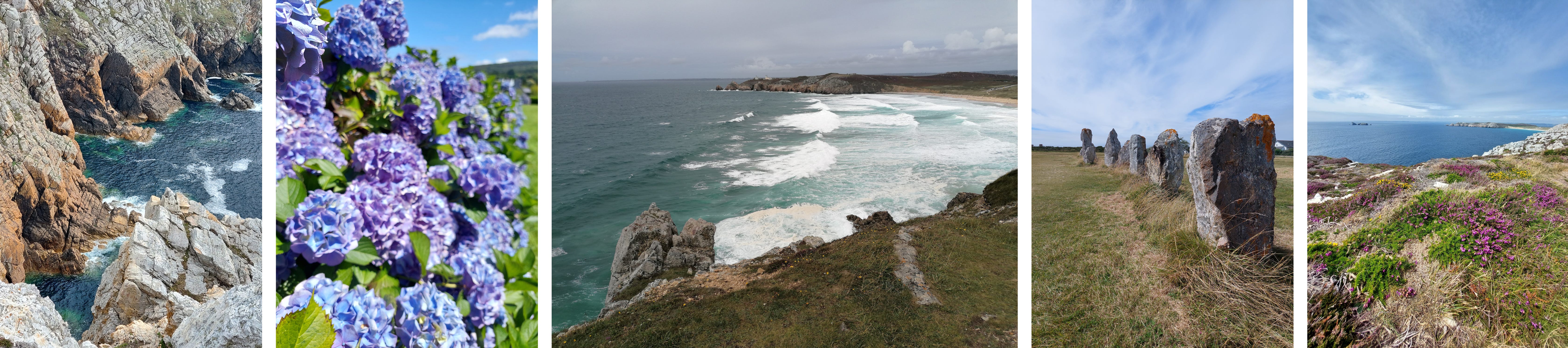
The region’s ancient standing stones, like the alignements de Carnac mentioned in Prévert’s poem, date back to pre-Celtic Neolithic times (around 4500 BCE), some of the oldest human structures in Europe. Bretagne's landscape is quite literally carved by history.
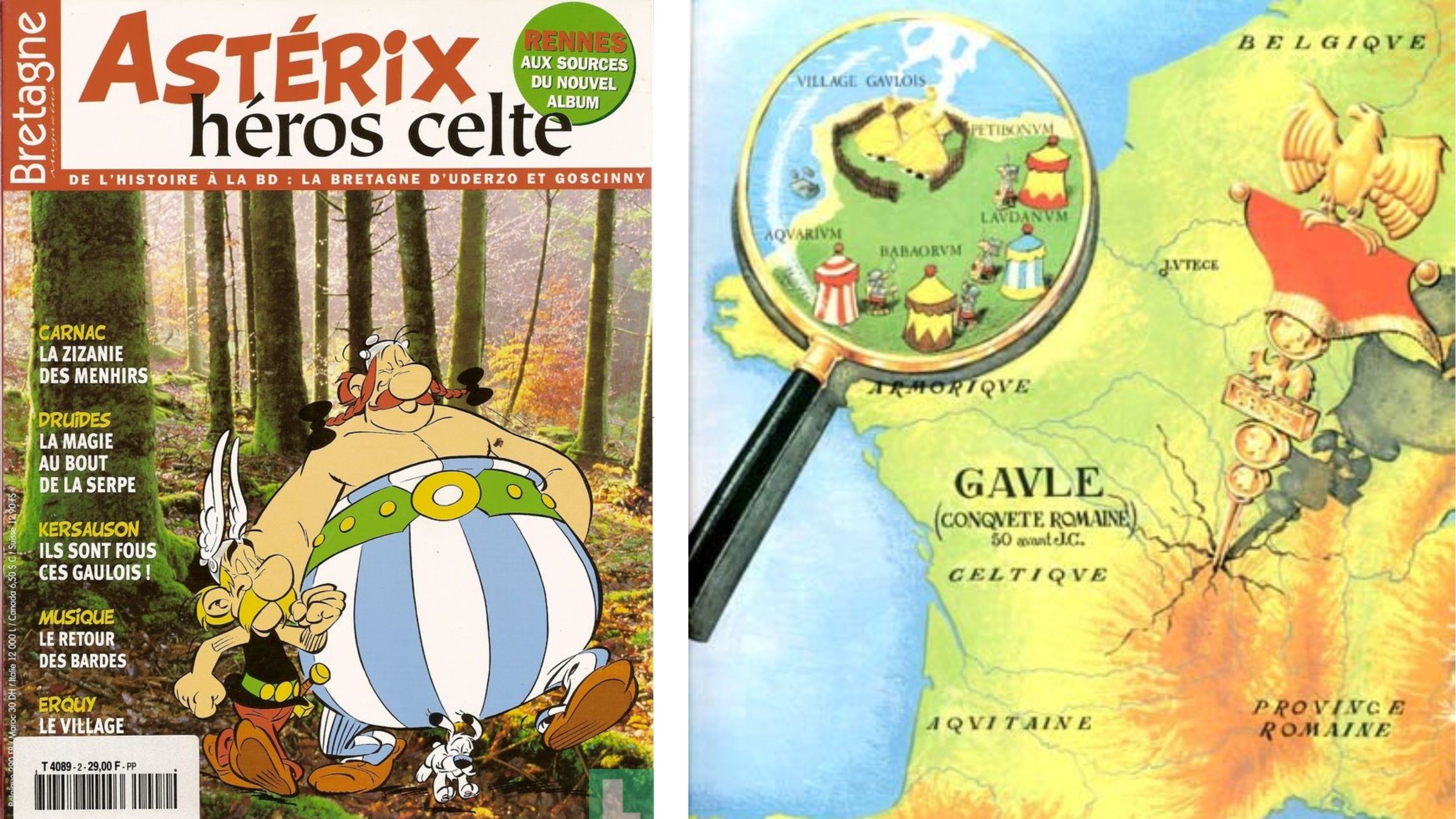
These Celtic origins are so foundational to Breton identity that they’ve even inspired global pop culture. The beloved French comic series Astérix is set in a defiant little Gaulish village that resists Roman occupation, much like Brittany resisted assimilation for centuries. Though not explicitly Breton, the spirit of Obélix, the menhirs he carries, and the fierce pride of that tiny village feel unmistakably Breizh.
An Independent Duchy
For centuries, Bretagne was a powerful duchy, a semi-independent realm with its own language, customs, and rulers. The Dukes of Brittany fiercely defended their territory from French kings and English invaders alike. Anne de Bretagne (1477–1514), our most cherished duchess, remains a symbol of independence and dignity. She became Queen of France twice through marriage, and despite political pressure, she negotiated fiercely to preserve Breton autonomy. The terms of the 1532 Edict of Union formally united Bretagne with France, but many privileges, fiscal and legal,were guaranteed to remain, at least in theory.
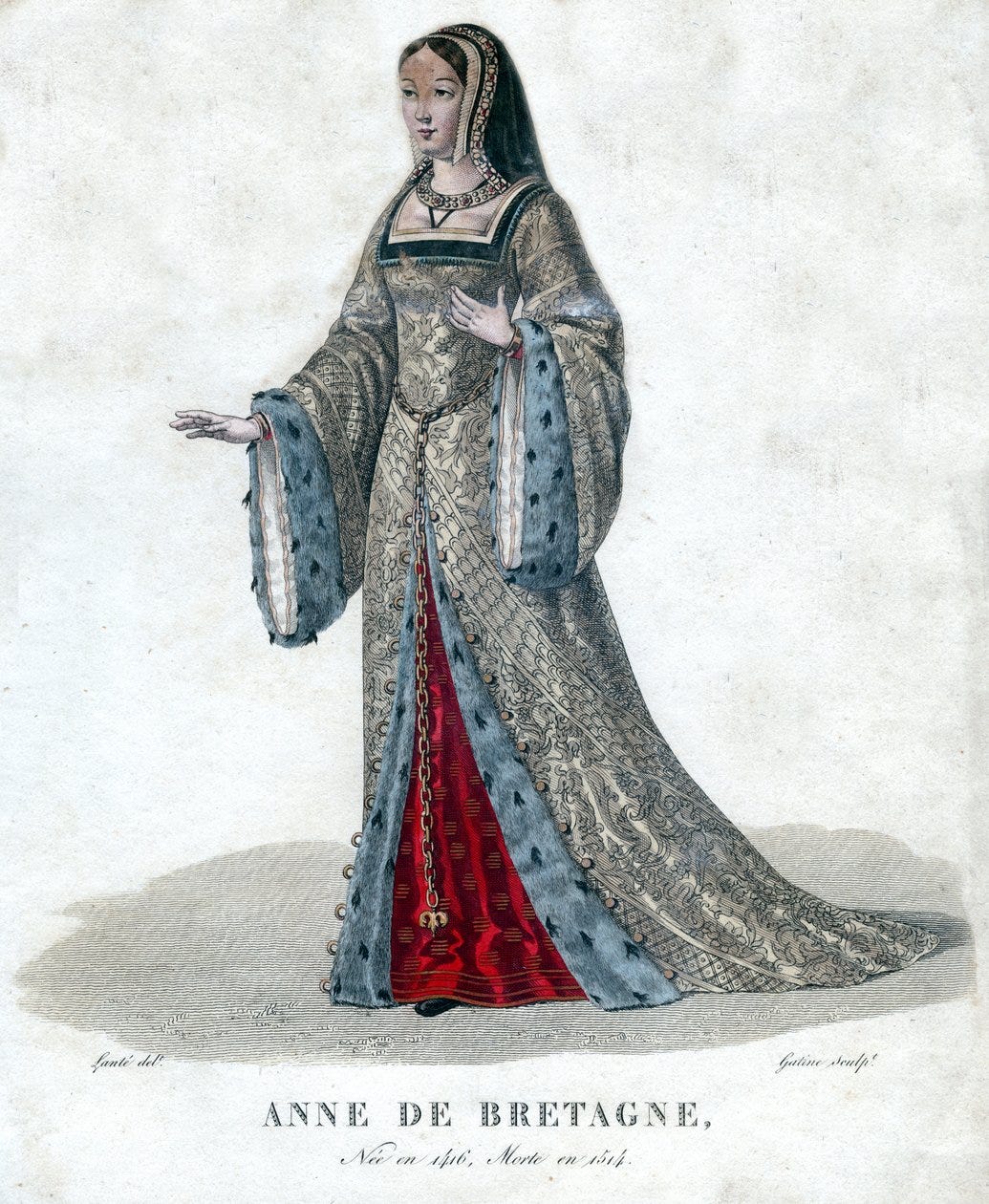
If you've ever driven through Bretagne and noticed something missing, no toll booths, you’re not imagining things. There's a long-standing legend in Brittany that goes like this: “La Bretagne n’a pas de péages, parce qu’Anne de Bretagne l’a exigé dans le traité d’union avec la France.” Translation: “There are no tolls in Brittany because Anne of Brittany demanded it in the treaty of union with France.” While there's no direct legal proof in the actual treaty that guarantees this, the idea persists, and the French government has maintained Brittany's motorways toll-free, at least in part, to honor regional identity and balance geographic equity. For Bretons, it's more than a road perk, it’s a symbol of autonomy, a small modern echo of Anne’s fierce negotiations centuries ago.
Le Gwenn-ha-du – L’emblème d’un peuple fier
Brittany’s black-and-white flag, the Gwenn-ha-du (“white and black” in Breton), is more than a regional symbol, it’s a banner of pride, resilience, and identity.
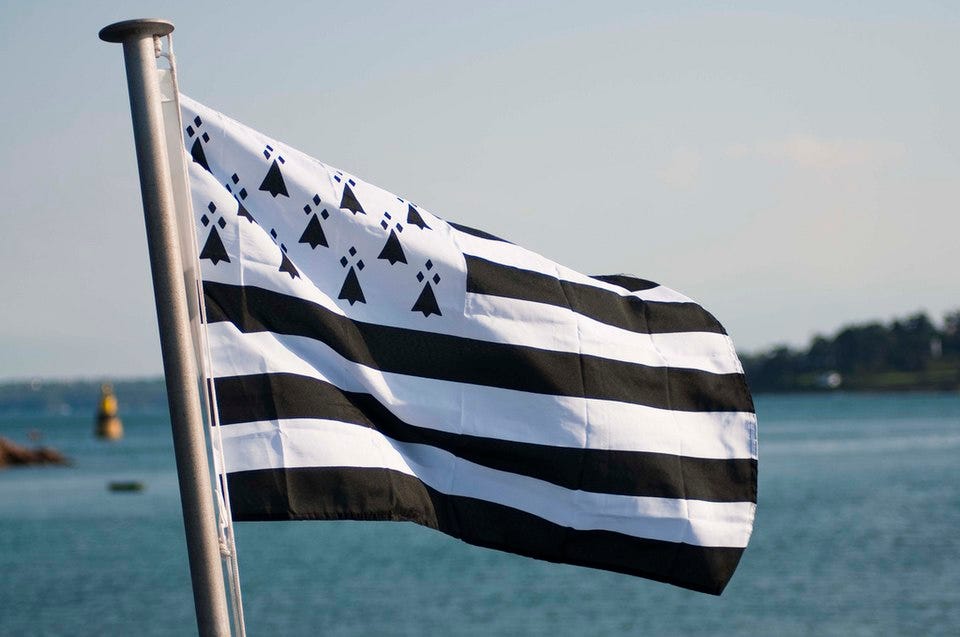
The nine stripes represent the historic dioceses of Bretagne: five black for the Breton-speaking regions (Bro-Leon, Bro-Dreger, Bro-Kerne, Bro-Wened, and Bro-Roazhon), and four white for the Gallo-speaking ones.
In the top left corner, the small ermine spots recall the ancient Duchy of Bretagne and its royal lineage, Anne de Bretagne herself bore them in her coat of arms. Today, the Gwenn-ha-du flies high at festivals, protests, sporting events, and family homes.
Language & Resistance
"Ne dalv ket mont d’an daoulamm, gwelloc’h mont tamm-ha-tamm "
"Il n’est pas utile de galoper, mieux vaut aller petit à petit "
"There's no point in galloping, it's better to take it one step at a time."
The Breton language (brezhoneg), a cousin of Welsh and Cornish, was widely spoken into the 20th century. Though it suffered from state repression (especially during the 19th and 20th centuries), recent decades have seen a powerful revival, with bilingual schools, media, and cultural festivals celebrating Breton identity. Schools like Diwan teach entirely in Breton, helping keep the language alive for future generations.
Speaking Breton today is more than a linguistic choice, it’s a gesture of cultural resilience. Knowing even a few words feels like carrying a bit of ancestral magic:
“Kenavo” = goodbye
“Yec’hed mat !” = cheers!
“Degemer mat” = welcome
Maritime Soul
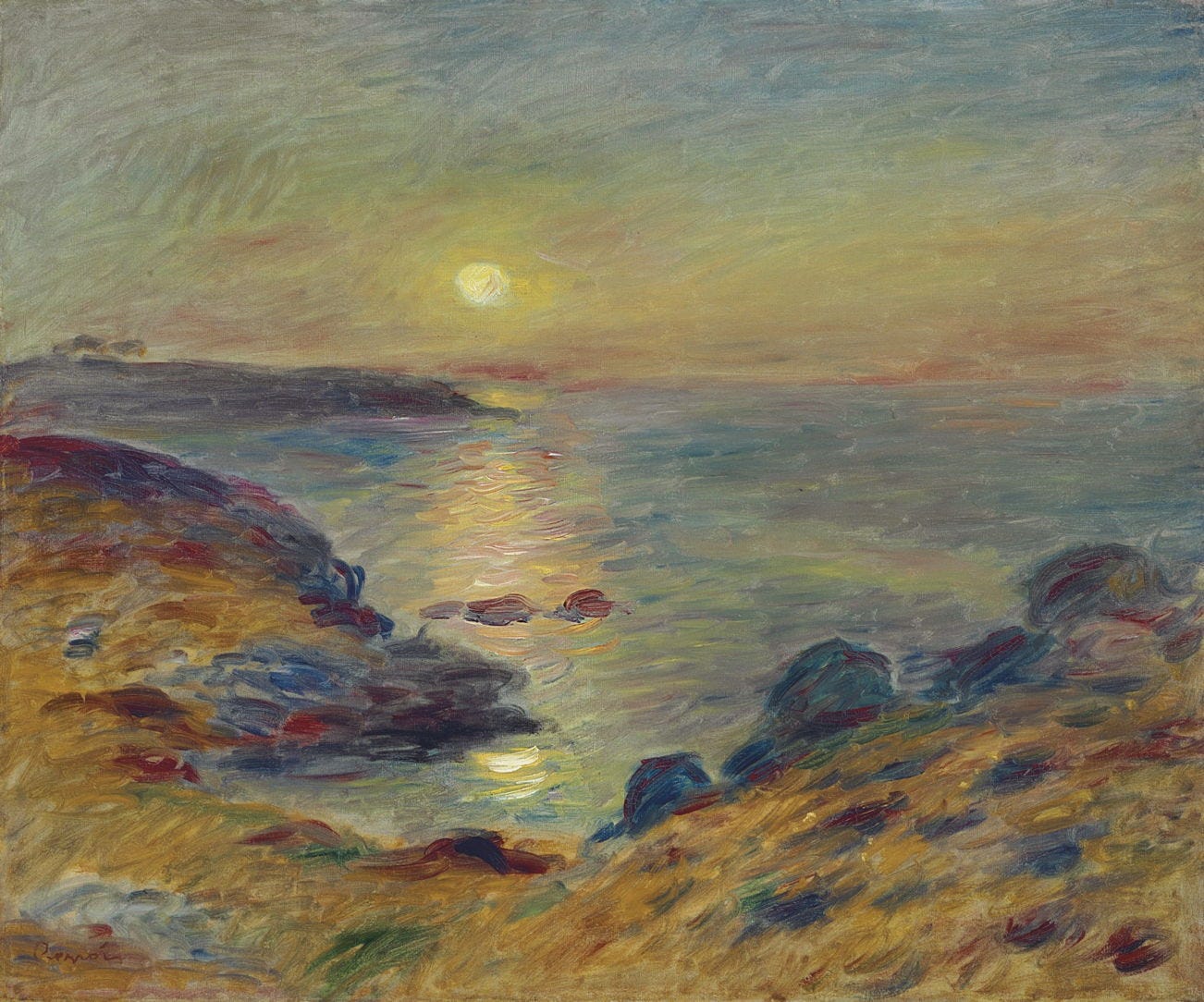
Bretagne is a land shaped by the sea. Its history is tied to fishing, sailing, and emigration. From Saint-Malo corsairs to the cod fleets of Douarnenez and the islanders of Sein and Ouessant, the ocean has always been both friend and foe.
The sea gives and sometimes, as Prévert reminds us, it takes.
Flavors of Bretagne
You can’t truly know Bretagne without tasting it. The region is rich in simple, soulful, and sea-kissed cuisine, often made with just a few ingredients, but always unforgettable.
Crêpes & Galettes – Delicate, paper-thin pancakes: sweet (crêpes) with salted butter caramel or jam, and savory (galettes) made from buckwheat flour, filled with egg, ham, and cheese. Best enjoyed with a bowl of cider.
Kig ha farz – A hearty dish from northern Finistère, sometimes called "Breton pot-au-feu." It blends tender meats, vegetables, and a kind of buckwheat pudding cooked in a cloth. Comfort food at its finest, especially in winter.
Kouign-amann – A glorious, caramelized cake from Douarnenez whose name literally means “butter cake” in Breton, and one of my all time favorite. Layers of dough, butter, and sugar melt into something impossibly flaky and rich.
Far Breton – A rustic baked custard, often with prunes, somewhere between a flan and a clafoutis. Eaten chilled or warm, it tastes like childhood and Sundays.
Cidre breton – Sparkling, slightly tart apple cider served in small ceramic bowls (bolées). Whether dry (brut) or sweet (doux), it pairs perfectly with a galette.
Salted butter – Not just an ingredient, but a way of life. With large flakes of sea salt (from Guérande, of course), it lifts every bite.
And don’t forget fresh seafood, les huîtres/oysters from Cancale, coquilles Saint-Jacques/scallops, moules/mussels, and fish straight from the Atlantic.
Breizh is a paradise for food lovers.
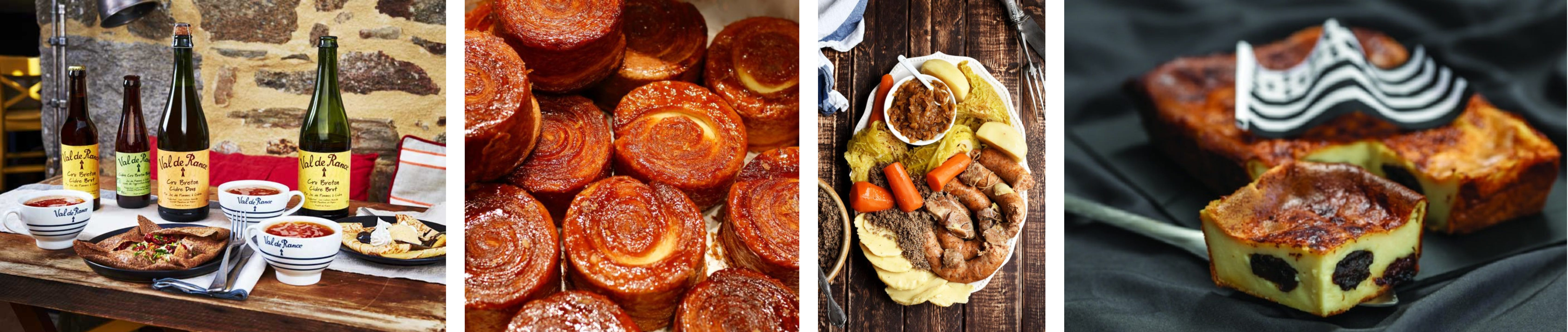
Have you tried any ? Which is your favorite? Let me know in the comments!
La Bretagne – Terre de poésie, d’histoire et de légendes
Bretagne is a region apart, with its own Celtic language, strong maritime traditions, and a folklore as rich as its windswept coastlines. From the alignements de Carnac to la forêt de Brocéliande, it’s a land where magic seeps into the soil. The tales are passed like heirlooms from one generation to the next. Here’s just a few…
If Bretagne has a heart, it beats in the forest of Brocéliande where magic sleeps. This mythical woodland is the enchanted stage of Arthurian legend in its French version. Here, magic isn’t metaphor, it’s part of the landscape. It is in Brocéliande that the wizard Merlin is said to have fallen in love with Viviane, better known as the Lady of the Lake (la Dame du Lac). According to the tale, Viviane, both pupil and enchantress, learned Merlin’s secrets and used them to imprison him, sometimes in a crystal cave, sometimes beneath a magical stone. But unlike the English tradition where Merlin fades into myth, in Bretagne, he sleeps, waiting. Viviane, guardian of the forest's deepest waters, is neither villain nor heroine, she’s an in-between force, a keeper of knowledge and mystery. She gives King Arthur the sword Excalibur, and raises Lancelot in secret, shaping him into a knight of legend. In Breton telling, she is the soul of the forest, elusive and eternal.
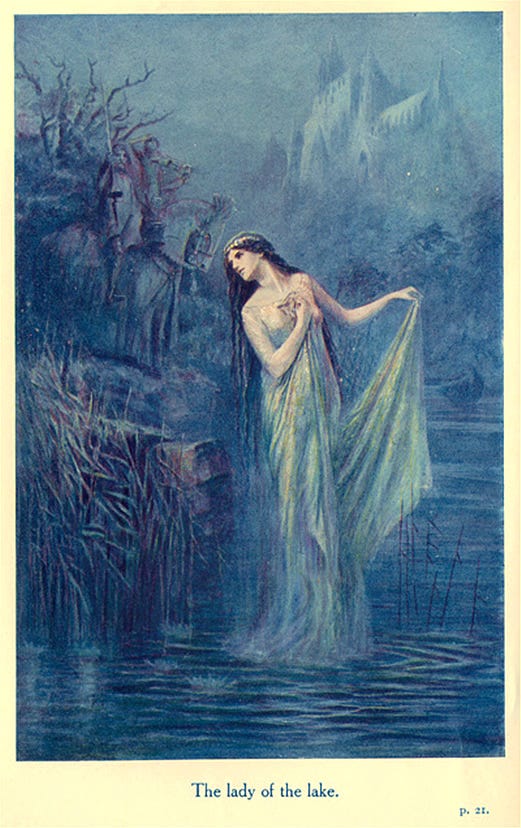
Visitors to Brocéliande today follow winding trails past moss-covered stones, mirrored lakes, and age-old oaks. Some seek out the Fontaine de Barenton, said to summon storms when disturbed, or the Tomb of Merlin, where locals still leave offerings, flowers, ribbons, poems. You might hear wind in the trees or the hush of branches brushing stories into your ears. Because in Brocéliande, legend is not past, it’s always just behind the next bend in the path.
In the shadowy corners of Bretagne’s moors and forests dwell the korrigans, mischievous, elusive little folk no taller than a child, yet powerful and ancient. By day, they hide beneath rocks or in hollow trees; by night, they dance in wild circles under the moonlight, their laughter like the tinkling of bells carried on the wind. These beings are guardians of hidden treasures and keepers of secret knowledge, but beware: those who anger a korrigan risk losing their way, their luck, or even their very soul. Legends say they can be both playful and perilous, sometimes helping a lost traveler, other times leading them astray. Their stories remind us of the delicate balance between nature’s charm and its dangers, a fitting symbol for a land shaped by wind, sea, and mystery.
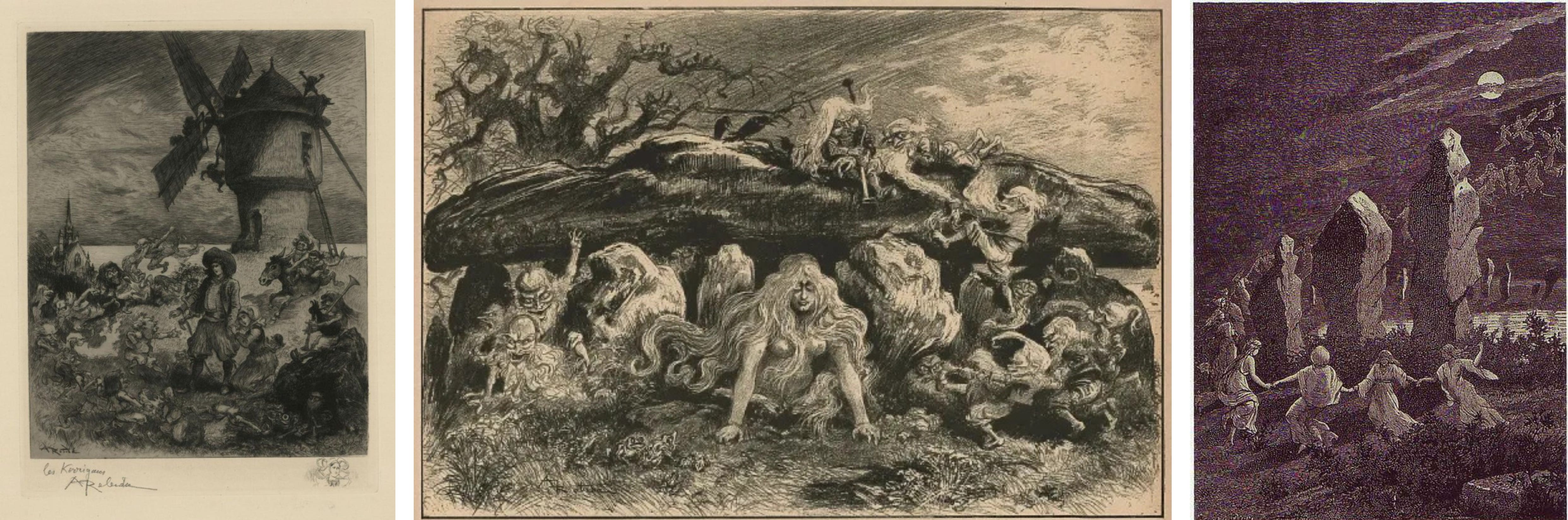
Bretagne’s coasts whisper of la Marie Morgane, sometimes one, sometimes many. In Breton, Mor means “sea” and ganet means “born.” The Marie-Morganes are literally “the holy (or beloved) ones born of the sea”. These mysterious water spirits live in sea caves or crystal palaces beneath the waves, often near Douarnenez. The Marie-Morganed are beautiful and powerful, half-women, half-fae, known to charm sailors with their songs. Some tales say they fall in love with mortals and take them to their underwater realm, where time stands still and life is sweet… but once taken, a human cannot return. Others tell of vengeful Morganes, flooding villages or sinking ships when scorned. Like the sea itself, they are changeable, tender or treacherous. They are not Disney mermaids. They are daughters of the deep: older than memory, wilder than myth.
And then there is l’Ankou, the shadowy servant of death, riding in a creaking cart, collecting souls in silence. When the wind howls or a door slams with no cause, old Bretons say, “Ankou is passing by.”
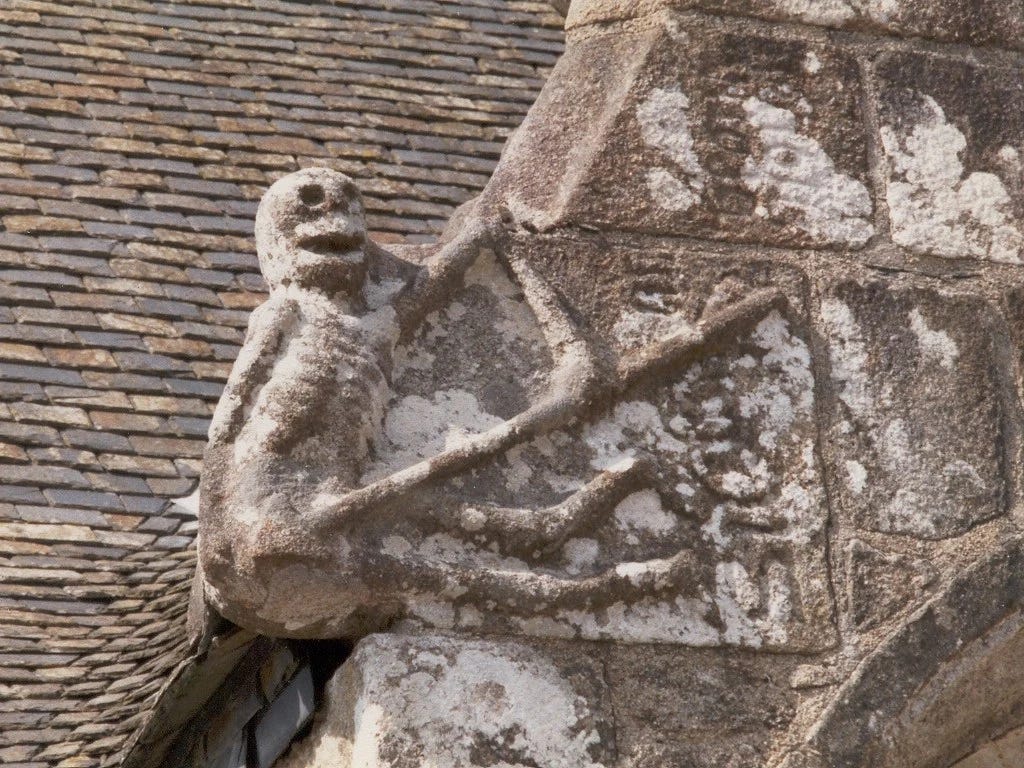
Another powerful legende is the haunting tale of the city of Ys (Kêr Ys in breton). Once a magnificent city built below sea level by King Gradlon, a legendary 4th-century ruler (Gradlon Mawr ap Cynan Meriadog), Ys was protected from the ocean by massive dikes and sea gates. For a time, it thrived in harmony with the waves. But one day, Gradlon’s daughter Dahut, driven by pride or temptation,depending on the version, opened the sea gates. The ocean surged in and swallowed the city whole. Some say that on calm days, sailors can still hear Ys’s church bells ringing from beneath the waves. Gradlon himself escaped on a magical horse and fled to Quimper, where his statue still stands today.
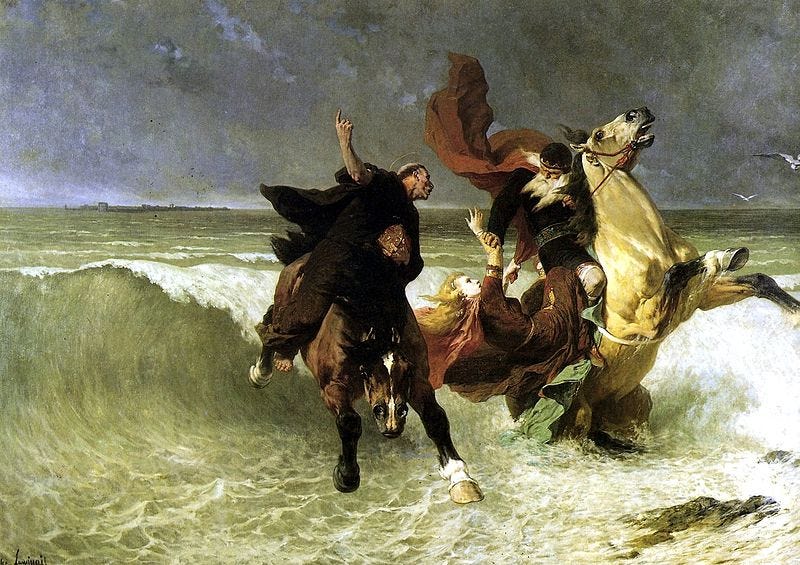
These are not just fairy tales, they are part of our worldview, shaping how we see nature, time, and fate. In Bretagne, reality and myth walk hand in hand.
Dernière Pensée
Prévert’s C’est l’été… captures more than just a season, it captures the very spirit of Bretagne: a land where history, legend, and the endless sea meet under the summer sun. In every whispering breeze and every stone of Carnac, summer becomes a timeless poem, inviting us to dream, to remember, and to celebrate a region that is as much magic as it is reality. Here in Bretagne, summer is not just a time of year, it’s a feeling, a story, and above all, a celebration of life itself.
Et vous ?
Have you ever been to Bretagne? Where did you go, Carnac, Quimper, Saint-Malo, the pink granite coast? What are your favorite memories, stories, or places? I’d love to hear about them! Feel free to drop a comment, share your photos, or even your favorite Breton words or dishes.
If you enjoyed this journey into Bretagne’s heart, its legends, language, poetry, and sea, I’d be truly grateful if you liked, shared, or restacked this piece.
Merci. Trugarez. 💛
See you next week for another poetic journey. Bonne écoute, bonne lecture, bon été et à bientôt.
Pour les nouveaux lecteurs…
If you’re new here, degemer mat, as we say in Breton: welcome.
This space is for lovers of language, rhythm, and meaning. For those who want to learn French not just through textbooks, but through poetry, literature, music, art, and maybe even a little magic. Each week, we dive into words that sing, stories that stay, and voices that shape the soul of the French language.
Whether you’re here to practice grammar or get lost in a legend, bienvenue. You’re exactly where you need to be.
I very much enjoyed this article! Dated a Breton years ago, and it was endearing how cross he got at the concept of beurre doux, like properly offended that it existed (the fact that they have it in Normandy just showed how dreadful they were.) Beurre salé for the win!
We have spent the last three years, since moving to Rennes from the US, exploring Bretagne. It. Is. Glorious!